
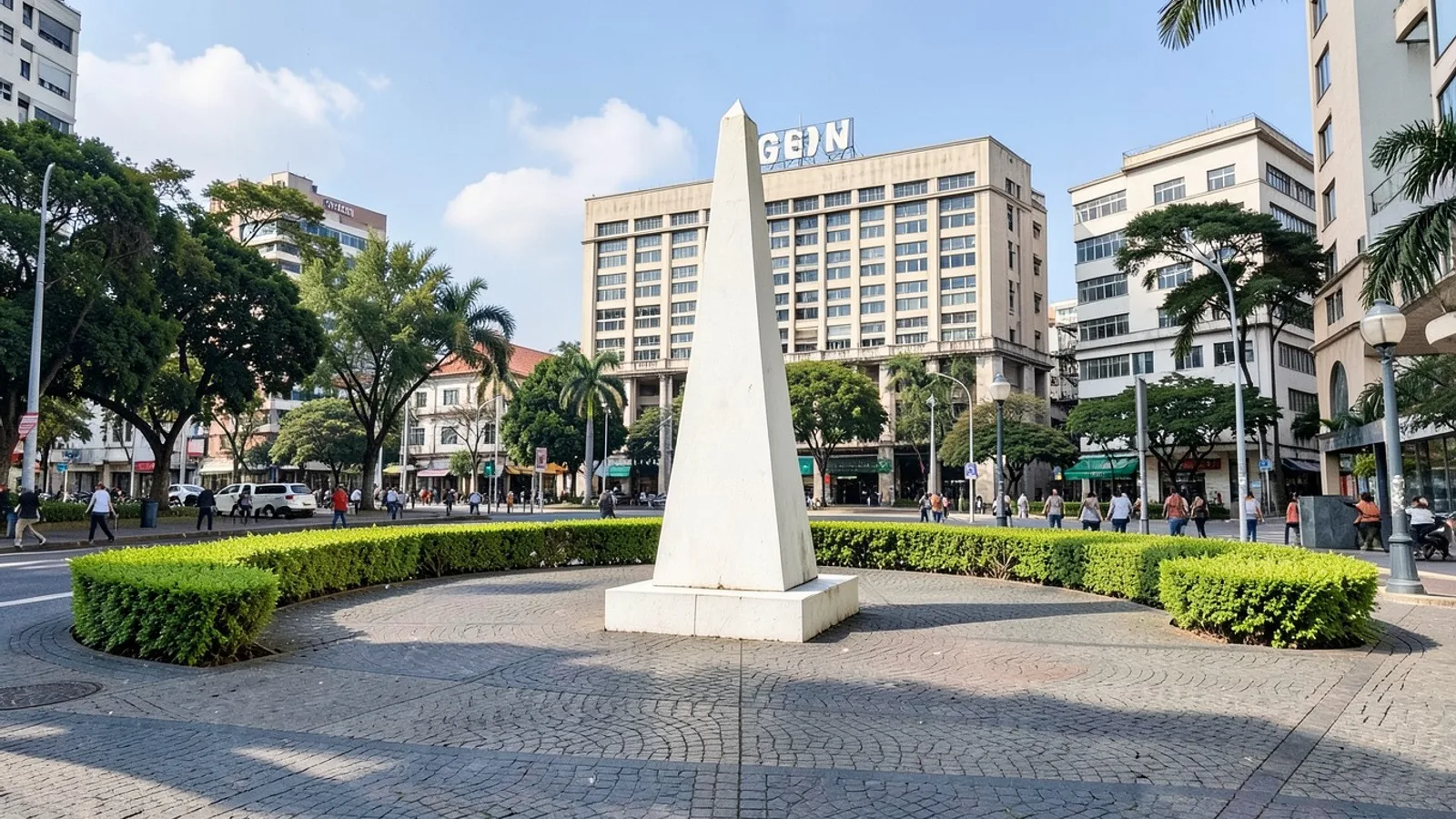
The consolidation of real estate transactions, the transfer of land ownership, and the structuring of lease agreements represent significant property milestones for the citizens of Vespasiano, a municipality in the state of Minas Gerais with a population of 138,583 inhabitants. The expansion of urban subdivisions, gated communities, and commercial and service areas requires meticulous technical examination grounded in the rules of the Civil Code and public records legislation. In the face of complex private instruments, tax certificates, and potential registration encumbrances, the advisory intervention of a real estate lawyer acts as a protective shield, safeguarding financial investments against formal nullities, pre-existing attachments, or fraud against creditors. To understand the options for initial guidance in the region, interested parties can consult the legal platform in Vespasiano and begin organizing the documentation for their case.
Commonly, individuals and legal entities seek professional support only when overt disputes arise, such as excessive delays in the completion of subdivisions, arbitrary withholding of earnest money, continued default on rent, or boundary disturbances. However, the timely action of a real estate lawyer shows its core effectiveness during the preliminary negotiations phase. The preventive examination of property registrations, the verification of the sellers' legal capacity, and the refinement of contractual clauses prior to the payment of any amount ensure the validity of legal transactions, safeguarding the buyer in the indispensable standing of a bona fide third party.
Essential guidelines for asset protection in building and rural property acquisitions
In the Brazilian legal system, ownership rights to real estate are not established simply by executing private agreements, handing over the keys, or paying the agreed price in full. The effective inter vivos transfer of ownership is perfected solely upon the registration of the deed of transfer with the competent Real Estate Registry. The use of informal instruments, popularly known as drawer contracts, confers only precarious possession of the asset, leaving the buyer exposed to judicial attachments arising from civil, tax, or labour enforcement actions brought against the seller whose name still formally appears on the property title record.
During the structuring of a purchase and sale, the real estate lawyer conducts a rigorous legal audit, analyzing the continuity of the chain of title to verify the legitimacy of the transferors. This verification includes examining the marital status of the parties and the mandatory requirement of spousal consent, according to the property regime in force for the marriage or stable union. The absence of spousal consent in legally mandated cases can lead to the legal invalidation of the entire transaction, resulting in severe financial losses for those who made the acquisition in good faith.
Another central precaution involves express protection against the risks of eviction by judicial ruling, a legal doctrine whereby the purchaser is deprived of possession or ownership of the property pursuant to a court decision based on a prior right belonging to a third party. When reviewing the terms of the promissory purchase and sale agreement, this professional qualified as a real estate lawyer inserts clauses that ensure full reimbursement of amounts, define mandatory deadlines for executing the definitive public deed, and establish proportionate late-payment and compensatory penalties in the event of non-compliance with the agreed timeframes.
In the case of developments purchased off-plan or lots that are part of an urban land subdivision, the transaction is additionally subject to the parameters of real estate development legislation and the Consumer Defence Code. Exceeding the statutory 180-day grace period for completing construction, the unwarranted charging of construction evolution fees after the established deadline, and metric discrepancies identified during the handover inspection require issuing formal notices to the construction company, enabling the filing of injunctive or compensation claims before the State Court.
Urban lease instruments, contractual obligations, and property repossession
The leasing of urban residential, commercial, and industrial properties is subject to the provisions of Law No. 8,245/1991. The guidance provided by a real estate lawyer establishes clear clauses regarding official periodic adjustment indices, criteria for apportioning necessary and useful improvements, move-in and move-out property inspections, as well as the precise distinction between ordinary and extraordinary expenses in condominium buildings, ensuring contractual balance and predictability for both landlords and tenants.
Regarding lease contract guarantees, the law strictly prohibits stipulating more than one modality to secure the same agreement, rendering any excess guarantee null and void. Professional guidance steers the technical choice among a personal guarantee, cash deposit, rent guarantee insurance, or fiduciary assignment of investment fund quotas. In the event of a guarantee provided by a married guarantor, obtaining the formal signature of the spouse is imperative to safeguard the full legal effectiveness of the obligation. In cases of persistent default, prompt intervention through default notices and the potential filing of an eviction lawsuit for non-payment facilitates the repossession of the property and the collection of overdue charges.
In commercial leases, legal assistance becomes even more essential to safeguard the business location and the goodwill established by the tenant. The timely filing of a commercial lease renewal action must strictly comply with the statutory limitation period established by law, and must be filed between one year and six months prior to the expiration of the lease term to be renewed. Simultaneously, the tenant’s unambiguous right of first refusal is safeguarded should the property owner manifest an interest in selling the leased asset to third parties during the course of the tenancy.
Property title regularization before extrajudicial registry offices and possessory protection
Formal registered ownership and physical possession constitute distinct legal situations with different effects. In established neighborhoods and peri-urban areas of Vespasiano, it is common to find properties without definitive title, resulting from inheritances without completed probate distribution, historic subdivisions that were never formally partitioned, or successive private assignments of rights. The absence of formal registration prevents securing mortgage financing, weakens hereditary transmission to heirs, and considerably reduces the property's market value.
In this context, the technical work of the real estate lawyer consists of identifying the appropriate instruments to enable definitive title:
- Compulsory adjudication: a procedure that can be conducted judicially or directly before the official of the competent Real Estate Registry through extrajudicial channels, when full payment of the purchase and sale commitment is proven and an improper refusal or impossibility on the part of the grantors to execute the definitive deed is established;
- Extraordinary and ordinary adverse possession: a form of original property acquisition established when possession is exercised continuously, peacefully, and with the intent to own for the statutory time periods set forth in the Civil Code, enabling processing at a registry office upon consent of the adjoining owners or judicially before the Judicial District of Vespasiano in the event of dispute;
- Special urban adverse possession: aimed at fulfilling the social function of housing in urban areas of up to two hundred and fifty square meters, requiring proof of uninterrupted possession for five years and confirmation that the applicant does not own any other real property;
- Probate inventory and formal distribution: essential for transferring ownership of real estate registered in the name of a deceased individual, formalizing the distribution among heirs and allowing formal registration on the real estate registry folio.
In cases where the rightful possessor suffers an immediate violation of their rights through dispossession or disturbance of possession, swiftness in filing possessory actions for repossession or maintenance of possession with a request for preliminary relief is essential. The complaint must be accompanied by consistent evidence of prior possession, tax receipts, a descriptive survey signed by a qualified technical professional, and a precise indication of the date of the unlawful act, providing sound evidence for the judge to issue a preliminary writ of possessory protection.
Technical and documentary verification procedures prior to payment
The hasty signing of purchase and sale commitments or the transfer of monetary deposits without the proper examination of records and certificates are the primary causes of financial loss in the real estate market. To safeguard invested assets and document the purchaser's good faith, following this systematic list of checks is recommended:
- Updated property registration certificate of full content and real encumbrances: obtained directly from the competent Real Estate Registry Office to prove the chain of title and rule out the existence of mortgages, judicial attachments, fiduciary liens, usufructs, or asset freezing orders recorded on the property deed;
- Municipal tax clearance certificate: issued by the tax department of the municipality where the property is located to certify the absence of debts regarding Urban Property and Land Tax (IPTU) and related fees, since real estate tax debts are of a propter rem nature and remain attached to the property regardless of any change in ownership or possession;
- Declaration of absence of condominium debts: for units located in vertical or horizontal condominiums, a declaration signed by the property manager or the management company, accompanied by the minutes of the election of the legal representative, certifying the full settlement of ordinary and extraordinary fees;
- Certificates of distribution of civil, tax, and bankruptcy lawsuits: searches conducted before the State Court and the Federal Court in the name of all sellers and their respective spouses, covering both the judicial district where the property is located and the domicile of the parties, eliminating the risk of fraud against execution;
- Negative Certificate of Labour Debts (CNDT): issued within the Labour Court, linked to the Regional Labour Court of the 3rd Region (TRT-3) in the state of Minas Gerais, to confirm that the sellers have no enforceable judgment debts that could affect the validity of the sale;
- Technical verification of project compliance and certificate of occupancy: verification before the municipal department of public works to check whether the area actually built on the property matches the approved project and the certificate of completion recorded on the property registration, avoiding fines and construction regularisation costs.
Territorial jurisdiction in the Judicial District of Vespasiano and bordering real estate dynamics
Civil, possessory, and public registry claims regarding properties located in Vespasiano are processed at first instance before the State Court, specifically in the Judicial District of Vespasiano, whose courthouse is established at Rua Sao Paulo, 1225 – Célvia, Vespasiano - MG, CEP 33200-608. Judgments rendered in the court of first instance are subject to appeal before the second instance at the Court of Justice of Minas Gerais (TJMG), located in the state capital, Belo Horizonte, 25.5 km away. On constitutional matters or federal statutory interpretation, cases may escalate to the Superior Court of Justice (STJ) and the Federal Supreme Court (STF), both located in the federal capital, Brasília. Citizens who prove economic hardship to afford court costs and contractual fees may turn to the assistance provided by the Public Defender's Office.
The geographical location of Vespasiano fosters strong property integration with surrounding municipalities. As a fundamental rule in disputes founded on real property rights, the territorial jurisdiction of the forum of the location of the property applies, demanding close attention to the physical location of the asset to determine the competent real estate registry office, the filing of lawsuits, and the payment of property transfer tax.
This intermunicipal dynamic is directly evident in contact with São José da Lapa, a neighboring municipality located just 4 km from Vespasiano. Transactions involving homes, land, and commercial areas constantly connect residents of these two contiguous localities. The technical work of the real estate lawyer verifies whether notarial acts and tax assessments comply with the correct real estate jurisdiction, preventing registrations or municipal tax collections from occurring before the improper public entity.
An equally significant flow of investment is observed with respect to Lagoa Santa, located at a distance of 7.3 km from Vespasiano. The development of gated residential communities and leisure areas around that locality attracts investors and families from throughout the region. Preventive legal counsel thoroughly reviews purchase and sale agreements and environmental guidelines, protecting the buyer against unfair clauses and irregular land subdivision that could jeopardize construction.
This territorial connection also extends to Santa Luzia, a municipality located 11.5 km from Vespasiano. Contractual transactions covering industrial warehouses and commercial properties along these borders require detailed examinations of the chain of title and urban land use regulations, preventing boundary disputes or administrative injunctions. Similar property and business interests reach nearby cities such as Pedro Leopoldo, 15 km away from Vespasiano. To deepen their knowledge of legal procedures in the region, users can browse the institutional service portal and consult complementary guidelines.
Ethical practice of law and referrals through the app
The practice of law is guided by strict adherence to the ethical precepts established by the Statute of Advocacy and the Code of Ethics and Discipline of the Brazilian Bar Association. When preparing legal opinions, reviewing draft contracts, or handling legal proceedings, the real estate lawyer acts with technical diligence and full transparency regarding the particularities of each procedural or notarial measure. In compliance with the regulatory requirements of the profession, no professional may provide promises or guarantees of results regarding lawsuits or property title registrations, as the final decision rests with judges and registry officials acting under state delegation.
In the context of private retention, legal fees must be agreed upon in advance and formalized in writing with the professional before work begins. The service agreement must specify in detail the scope of the tasks covered, the costs associated with consulting or managing legal proceedings, and the allocation of notarial fees, public charges, and court costs, ensuring complete financial clarity between the contracting parties.
For those who need prompt and confidential technical assistance in the municipality and surrounding cities, the app provides a functional and secure channel to connect individuals with legal needs to qualified local professionals. The user describes what happened in their own words, using voice or text messages, completely free of charge and without the need to log in first. An assistant then organizes this account into an objective case summary and routes the request to lawyers serving the real estate law practice area in the municipality.
The choice of which professional to interact with rests exclusively with the user. The initial conversation takes place in a private and confidential environment within the app itself, without contact details being exposed before mutual agreement between the parties to proceed with formal assistance. Lawyers maintain an informative page displaying their respective practice areas and respond directly to inquiries received through the platform.
If you need to review a real estate purchase and sale agreement, draft commercial or residential lease agreements, handle adverse possession proceedings, or defend the possession of property in Vespasiano and the surrounding region, describe your legal need in the app and speak in a private environment with a real estate lawyer, agreeing on fees in writing before the service begins and making your property decisions with complete technical clarity and security, without any promise of outcome.
Vespasiano and surroundings
Lawyers who practise in Vespasiano also take cases from nearby cities.
How it works
- Tell the case
By voice or text, no sign-in. It takes a few minutes.
- The assistant organises it
Facts, dates and documents become a clear summary.
- You choose the lawyer
Professionals who practise in Vespasiano, in alphabetical order.
Legalocal does not recommend or rank professionals: the list follows alphabetical order.
Frequently asked questions about Vespasiano
Where are real estate law cases processed in the Judicial District of Vespasiano?
Lawsuits concerning real estate located in the municipality are processed in the State Court, at the Courthouse of the Judicial District of Vespasiano, located at Rua Sao Paulo, 1225 – Célvia, Vespasiano - MG, CEP 33200-608. When the issue involves properties in neighboring municipalities, such as São José da Lapa, 4 km away, the professional observes the jurisdictional rules of the property's location for proper filing.
How does a property attorney in Vespasiano assist before signing a contract?
The professional conducts a preventive review of documents, checking the property deed certificate for encumbrances at the real estate registry office, municipal tax clearance certificates, and any civil or labor lawsuits against the sellers. In transactions involving properties in nearby cities such as Lagoa Santa, 7.3 km away, this verification eliminates risks of prior attachments or contractual defects.
When should one consult an attorney specializing in real estate law for possession and adverse possession?
Legal counsel is recommended when the possessor seeks definitive title to properties without a regularized deed, in compulsory adjudications, or in possessory actions against unlawful dispossession and trespass. If the property or its boundaries are connected to Santa Luzia, located 11.5 km from Vespasiano, the lawyer guides the notarial or judicial procedures to safeguard ownership.
How does contacting a property attorney through the app work?
Users describe their case in their own words, via voice message or text, free of charge and without needing to log in. An assistant organizes this account into a clear summary and routes the request to local attorneys in the field. The individual chooses whom to speak with in a private environment within the app, and legal fees are agreed upon in writing before work begins, without any guarantee of case outcome.